The Hong Kong Police Force often works on a perpetual basis to enhance the safety of our roads. In an effort to reduce traffic accident and fatality numbers, the police carried out traffic management controls and enforcement actions so that careless or inconsiderate drivers can be caught, while at the same time monitoring the behavioural patterns of cyclists and pedestrians.
In 2007 a slight increase in the total number of traffic accidents was recorded, rising 3.1% to 15,315. Casualties also rose to 19,625, which is a 3.98% increase compared with 2006. 160 people died in road traffic accidents in 2007, which is the third lowest number of fatalities recorded in Hong Kong since 1958.
Legislation Review
The Government's guaranteed commitment to continued legislative review, accounts for the regular introduction of new measures to enhance the safety of all road users.
New Legislation
In an effort to enhance road safety, the Road Traffic Legislation (Amendment) Bill 2008 passed in the Legislative Council in June 2008. The package of measures includes :
raising the maximum imprisonment term for causing death by dangerous driving from five to ten years;
disqualifying a drink driving offender from driving for not less than three months on a first conviction, and requiring him to attend a driving improvement course ("DIC") on a mandatory basis;
providing the Police with a general power to conduct screening breath tests at random, and introducing a pre-screening device to facilitate the conduct of such screening breath tests;
imposing mandatory requirement for repeat traffic offenders and offenders of serious traffic offences to attend DICs, and increasing existing and introducing new penalties for non-compliance with such a requirement;
introducing the Probationary Driving Licence scheme to novice drivers of private cars and light goods vehicles.
Selective Traffic Enforcement Policy (STEP)
Since 1993, the Selective Traffic Enforcement Policy (STEP) requires an annual review of major traffic accidents from the previous 12 months. This is in an effort to prioritise traffic enforcement and ultimately assist in the prevention of traffic accidents and maintenance of smooth traffic flows.
Assessing accident's contributory factors helps to form the parameters for STEP's focus on offences that cause, or are most likely to cause, accidents. STEP is just one example of how technology is utilised to enhance law enforcement. Continued use of advanced technology is assisting in the crackdown on dangerous road practices, and prosecuting offenders.
Inconsiderate Driving Manners
We're all taught the importance of good manners in social and business settings, but some people seem to forget their manners when behind the wheel. Unfortunately, the implications of bad manners are not only centred around discourtesy but they can also kill. The Police have identified five main actions that directly impact the incidence and severity of accidents:
Driving too close to vehicle in front
Losing control of vehicle
Careless lane changing
Improper or illegal turn
starting vehicles negligently
Drink Driving
Legislation to combat Drink Driving in Hong Kong was first introduced in 1995. The prescribed limit was reduced from 35µg to 22µg per 100ml in 1999. Legislation plays a significant role in saving lives on our roads.
In 2007, 42,688 drivers were breathalysed, and 1,417 were subsequently found to have exceeded the prescribed limit. These results are in line with those of previous years, though a positive outcome showed a majority of drivers are responsible for their actions after alcohol consumption with 96.7% of breathalysed drivers having either no alcohol or alcohol level below the prescribed limit in their test results.
Red Light Camera
Red Light Cameras (RLCs) play an important role in enhancing road safety. Installed to monitor drivers' observance of traffic signals at selected junctions, RLCs photographically capture vehicles ignoring red lights. Action is taken against these offenders using this evidence.
There are now 96 RLCs in 131 fixed enforcement sites across Hong Kong. The Transport Department and Police are working on plans to install more cameras in existing and new locations, bringing the total number of cameras and sites to 155.
Speed Enforcement Cameras
Speeding results in a majority of serious traffic accidents. To combat this, Speed Enforcement Cameras (SECs) are installed along a number of major roads and provide a photographic record of offenders, which include their travelling speed at the time. As well as a prosecution tool, SECs are a powerful deterrent to drivers who may otherwise consider exceeding the speed limit.
Since the introduction of Hong Kong's first SEC in 1999, the number of SECs has increased to 10, operated at 85 fixed enforcement sites. To further reduce speeding-related traffic accidents, the Transport Department and Police are also working on plans to bring the number of cameras and sites to 20 and 100 respectively and the camera-to-sites ratio to 1:5.
Video System
Police cars equipped with In-car Video System are a powerful tool in the fight against speeding and other erratic driving behaviours, such as improper lane changing and tailgating. Enhanced evidence of video records strengthens the police cases in court. Hopefully, the deployment of these systems will result in motorists remaining alert and increasing their level of driver responsibility.
Laser Guns
Steps have been taken to ensure that Police have sufficient laser guns to enhance enforcement against speeding offences. The equipment is regularly deployed at strategic locations throughout Hong Kong.
General Safety
In 2007, the Police continued to play a frontline role in enforcing safety legislations. Seatbelts' proven reduction of death and serious injuries in traffic accidents. During the year, 15,770 drivers and passengers were prosecuted for seatbelt-related offences. Likewise, 34,671 persons were prosecuted for using handheld telecommunications equipment while driving. Publicity and education play a vital role in enforcing this legislation.

















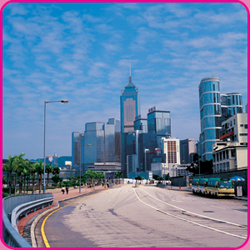 The Hong Kong Police Force often works on a perpetual basis to enhance the safety of our roads. In an effort to reduce traffic accident and fatality numbers, the police carried out traffic management controls and enforcement actions so that careless or inconsiderate drivers can be caught, while at the same time monitoring the behavioural patterns of cyclists and pedestrians.
.JPG) Red Light Cameras (RLCs) play an important role in enhancing road safety. Installed to monitor drivers' observance of traffic signals at selected junctions, RLCs photographically capture vehicles ignoring red lights. Action is taken against these offenders using this evidence.
Red Light Cameras (RLCs) play an important role in enhancing road safety. Installed to monitor drivers' observance of traffic signals at selected junctions, RLCs photographically capture vehicles ignoring red lights. Action is taken against these offenders using this evidence. Speeding results in a majority of serious traffic accidents. To combat this, Speed Enforcement Cameras (SECs) are installed along a number of major roads and provide a photographic record of offenders, which include their travelling speed at the time. As well as a prosecution tool, SECs are a powerful deterrent to drivers who may otherwise consider exceeding the speed limit.
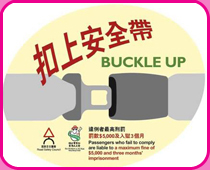 In 2007, the Police continued to play a frontline role in enforcing safety legislations. Seatbelts' proven reduction of death and serious injuries in traffic accidents. During the year, 15,770 drivers and passengers were prosecuted for seatbelt-related offences. Likewise, 34,671 persons were prosecuted for using handheld telecommunications equipment while driving. Publicity and education play a vital role in enforcing this legislation.