The number of accidents that occur on Hong Kong's roads can be reduced with a few simple measures such as maintenance of vehicles and the upkeep of our roads. The Council works together with government departments to promote the maintenance measures and ensure Hong Kong roads are safe to drive.
Government Initiatives
Site Investigations and Improvements
Hong Kong drivers are able to enjoy well maintained roads due to the collaboration between the Police, Transport, and Highways Departments.
Through the Traffic Accident Reduction Co-ordination Committee (TARCC), the government can monitor and identify traffic accident blacksites. Every three months, the Transport Department compiles a list of locations that have had a minimum of six traffic accidents limited to pedestrian injuries, as well as trouble-spots where at least nine accidents incur any casualties, both measured over a year-long period.
100 sites were evaluated in 2007. These have enabled the Government to identify potential problems and to ensure a safer environment for both drivers and pedestrians. The Blacksite Investigation Programme has seen a reduction in the number of blacksites from 140 in 1994 to 85 in 2007 using simple and cost-effective corrective work.
MASS Action
Another device the government utilises to investigate traffic blacksites is Multiple Application of Standard Solutions (MASS). With limited resources, MASS is able to break-down the contributory factors of blacksite accidents in order to implement safety changes in multiple areas within a relatively short time.
Area Studies
Although a majority of accident investigations only require small changes, there are instances where major revision of traffic flow is needed. The result is a major overhaul of the area that enables safer driving and a safer community.
Engineering Measure
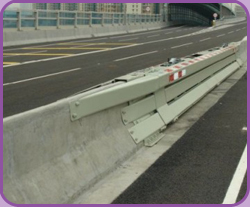
In 2007, the Highways Department has conducted trials on the use of Movable Steel Barriers for replacing tubular crash gates at emergency opening in the central divider of dual carriageways. These Movable Steel Barriers consist of robust movable and transition units providing a containment capacity comparable to normal barriers. Unlike Removable Concrete Barriers which require lifting plant and take an hour for removal, the Movable Steel Barriers can be opened up manually within a few minutes for passage of emergency vehicles. The long term performance of Movable Steel Barriers will be monitored in 2008.
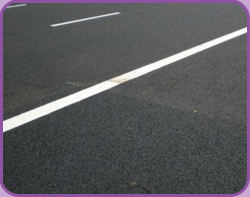
On the other hand, the Highways Department has started adopting new polymer-modified friction course as the standard surfacing for high speed roads. Compared with the normal surfacing material, the new material is more durable, and can thereby reduce deterioration and enhance safety.
Vehicle Maintenance
Vehicle Approval and Registration
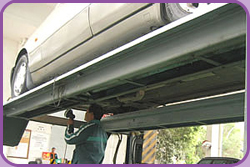 All new vehicles are required to undergo a roadworthiness inspection in accordance with road traffic regulations. . Exemptions are only afforded (by the Transport Department) to vehicle manufacturers who guarantee vehicle conformity. All new vehicles are required to undergo a roadworthiness inspection in accordance with road traffic regulations. . Exemptions are only afforded (by the Transport Department) to vehicle manufacturers who guarantee vehicle conformity.
Annual Inspections
Annual mandatory inspections are required of commercial vehicles (regardless of age) and private cars who have been on the road for at least six years, as part of licensing regulations. Only authorised inspection centres can perform the necessary checks, and licences are denied to failing vehicles. Repairs can be made when defects are found, however, drivers must submit the car for follow-up tests.
Franchised Buses
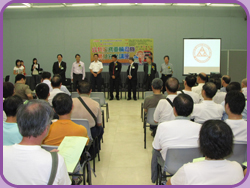 To ensure the highest standards of operation for the safety of its passengers, franchised buses are subject to unannounced spot checks. Appointed inspections are also made on non-franchised buses. Both measures have increased maintenance and safety. To ensure the highest standards of operation for the safety of its passengers, franchised buses are subject to unannounced spot checks. Appointed inspections are also made on non-franchised buses. Both measures have increased maintenance and safety.
Student Service Vehicles
 The safety of our future generations is of vital importance. All operators of student service vehicles are required to hold a valid passenger service licence, and every student service vehicle must carry a passenger service licence certificate. The safety of our future generations is of vital importance. All operators of student service vehicles are required to hold a valid passenger service licence, and every student service vehicle must carry a passenger service licence certificate.
To enhance the safety of students on student service vehicles, the mandatory escort requirement would be extended to school private light buses (nanny vans) serving primary students with effect from September 1, 2008. Legislation amended in 2007 also specified that student service vehicles registered on or after May 1, 2009 should be equipped with safer seats in accordance with specified standards |